Our company mainly produces various filters, filter elements, filter product testing equipment, hydraulic accessories and other products



Blogs
Introduce the working principle of a vacuum cleaner filter.
Release Date:
2025-06-11
The core function of a vacuum cleaner filter is to purify the inhaled air, intercepting dust, particulate matter, and other pollutants to prevent them from being re-released into the environment and protecting core components such as the motor.
The core function of a vacuum cleaner filter is to purify the inhaled air, intercepting dust, particulate matter, and other pollutants to prevent them from being re-released into the environment and protecting core components such as the motor. Its operating principle is mainly based on a physical filtration mechanism. When the vacuum cleaner starts, the motor drives the fan to rotate at high speed, creating negative pressure at the suction port and quickly drawing in dust-laden air. This dust-laden air first passes through a primary filtration structure such as a dust cup or dust bag. At this time, large dust particles, due to their large inertia and weight, will directly impact the inner wall of the dust cup or the surface of the dust bag and settle down, completing the initial separation. Fine particulate matter will continue to move with the airflow and enter the filter area. The filter is usually made of special materials with a dense array of tiny pores on its surface. When air passes through the filter, these fine particles are intercepted on or inside the filter, unable to continue to be discharged with the airflow, thus achieving air purification. The clean air that has passed through the filter is then discharged from the vacuum cleaner by the motor.
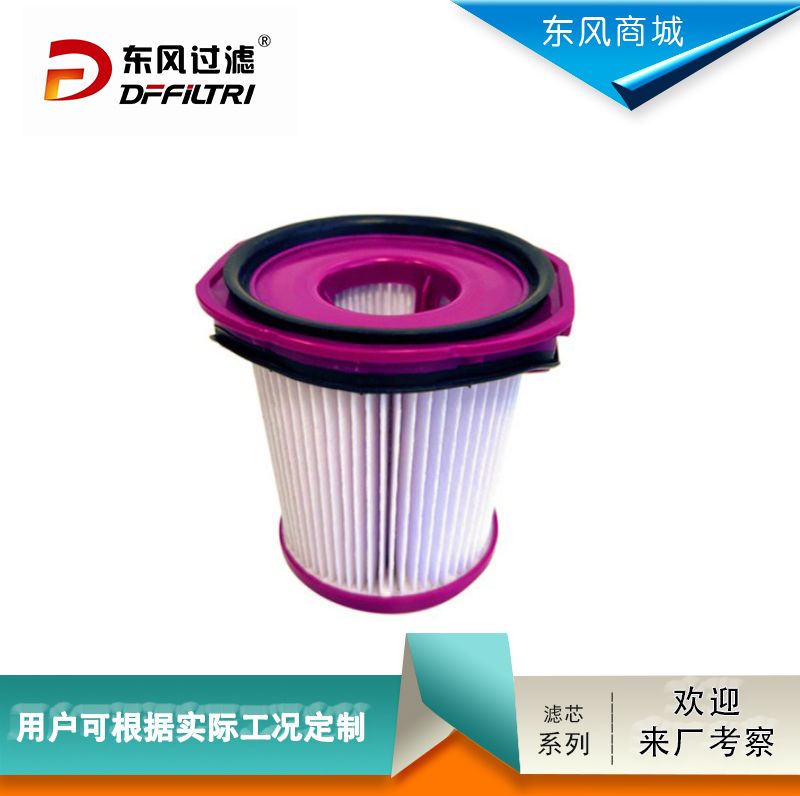
The efficiency and effectiveness of filter filtration are affected by many factors. Filters of different materials and structures have significantly different filtration precisions. For example, common sponge filters have relatively low filtration precision and are mainly used to intercept larger dust particles, suitable for industrial applications with low filtration requirements; while HEPA filters have extremely high filtration precision, capable of filtering out particles larger than 0.3 microns, with a filtration efficiency of over 99.97%, often used in medical environments or precision electronics workshops with strict air quality requirements. In addition, dust will gradually accumulate in the filter during use, causing reduced breathability and reduced suction. Therefore, regular cleaning or replacement of the filter is crucial. Washable filters can be cleaned with water to remove surface dust, while non-washable filters such as paper or HEPA filters need to be cleaned by gently tapping or using a vacuum cleaner to maintain their filtration performance, ensuring that the vacuum cleaner can always operate efficiently and stably.

Address:
Xiwangcun Industrial Zone, Muye District, Xinxiang City, Henan Province
Phone
WeChat Official Account